
Tern GSD vs HSD
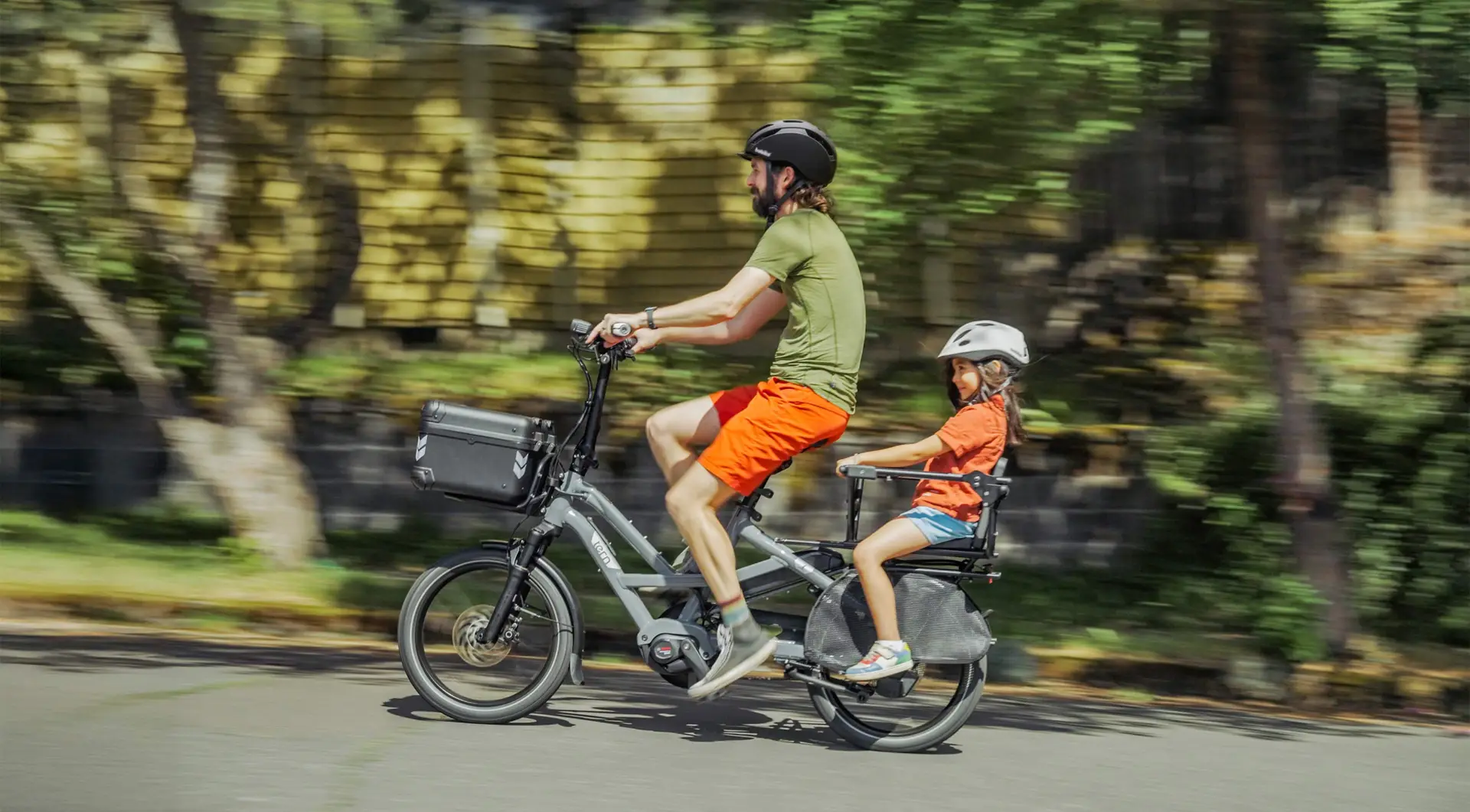
The GSD is a minivan. The HSD is a crossover SUV.
That’s what I tell people in the shop, and it holds up better than any spec sheet.
The GSD is a full-blown cargo bike. It’s built to haul two kids and a week of groceries up a hill, every day, for years, and it’s great at it. But it’s like driving the minivan all the time: you’re on a big bike even when you’re just running to the post office.
The HSD is the crossover. It can kind of do everything. It’s fast and fun to ride as a regular bike, and when you need it to, you can throw a passenger on the back on the way home from the train. It’s the same reason so many families traded the minivan for a crossover: most days you don’t need all that room, and the crossover still handles the days you do. That’s why so many people end up loving the HSD.
Here’s how I’d sort it out if you were standing in the shop. It usually comes down to how many kids, where the bike lives, and how much of your riding is hauling versus just riding.
| Tern HSD (Gen 3) | Tern GSD (Gen 3) | |
|---|---|---|
| Starts at | $4,999 (P5i) | $4,999 (P10) |
| Top of the range | $7,499 (S9i Sport) | $10,999 (R14) |
| Built for | A one-kid family | A two-kid family, kids roughly 0 to 16 |
| Rear rack | 176 lb | 220 lb |
| Total it can carry | 419 lb, rider included | 463 lb, rider included |
| Motor | 75 Nm, or up to 90 Nm on the Sport builds | 85 Nm Cargo Line on every build |
| Bike weight | About 62 to 64 lb | About 79 lb (P00) |
| Storage | Folds in 5 seconds, stands on end, shorter than a normal bike | Stands on its tail, but it’s a long bike |
| Bosch ABS | No, not on any HSD | Yes, on the S10 and R14 |
| RI rebate | $350, or $750 income qualified. Both qualify. | |
How many kids, and for how long?
The GSD is built around a two-kid family. The HSD is built for one. That’s the first thing I ask about, and it sorts most people on its own.
The HSD’s rack is rated for 176 lb. That’s a kid seat, a kid, and the groceries. For one child, from toddler through the early school years, it’s the right size, and it’s a lot less bike to manage.
The GSD’s rack takes 220 lb, and the whole bike is built around carrying two kids, and carrying them for a long time. The same bike that carries two toddlers now will carry two ten year olds on the deck later, which is why GSD families tend to keep the bike for years.
If there’s a second kid now, or one on the way, I’d look hard at the GSD. If it’s one kid and you’re sure it’s staying one kid on the bike, the HSD will probably make you happier day to day.
Where will it live?
This is the HSD’s whole argument. It folds in about five seconds and parks standing on end, and it’s shorter than a normal bike. It lives in a hallway, a closet, or the corner of a first floor apartment, and it fits in an elevator or the back of a lot of cars.
The GSD also stands on its tail, which helps more than you’d think, but it’s a long bike and it weighs more. It wants a garage, a shed, a basement with a decent door, or a porch you can lock it to. On a car, it goes on a hitch rack.
If you’re carrying the bike up stairs, get the HSD.
Will it get you up Providence hills?
Both will. The question is what you’re carrying when you do it.
Every GSD runs Bosch’s Cargo Line motor at 85 Nm with 400% assist, the same motor on the $4,999 P10 as on the $10,999 R14. With two kids on the back, that’s the one I want under me on College Hill.
The standard HSDs run Bosch’s Performance Line at 75 Nm, which is plenty for one kid and a bag. The Sport builds, the P10e Sport and S9i Sport, leave the factory at 85 Nm and go to 90 Nm with a free Bosch update you install from the app. If you’re a bigger rider, you live at the top of a steep street, or you just want more shove, the Sport builds close most of the gap.
How heavy is it to live with?
An HSD weighs about 62 to 64 lb. A GSD P00 is about 79 lb. That 15 lb doesn’t matter much on the road, where the motor does the work. It matters a lot when you’re backing it off a curb, turning it around in a narrow hallway, lifting the back end over a step, or wrestling it onto a car rack.
If someone smaller in the house is going to be moving the bike around, have them ride both and then try parking both. That usually settles it.
Which build of each?
Both come in a few versions, and the differences inside each family matter more than the badge.
Chain or belt. The chain builds are the least expensive and easy to fix anywhere. The belt builds have no chain and no grease, and the ones with an Enviolo hub shift while you’re stopped, which you’ll appreciate at every red light with a loaded bike.
Smart System. The newer Bosch platform gives you the eBike Alarm, GPS tracking and your phone as the key. Every Gen 3 HSD has the phone key; the alarm and GPS need Bosch’s ConnectModule, which comes on the S9i Sport. On the GSD it starts at the S10, and the S10 is also the lowest priced GSD with Bosch ABS. ABS is for coming downhill into a stop sign on wet leaves with two kids on the back, and you can’t add it later.
If you tell me how you’ll use it, I’ll tell you which build I’d buy. It’s often not the most expensive one.
How families set them up
Neither bike carries a kid straight out of the box. Here’s how they usually leave the shop.
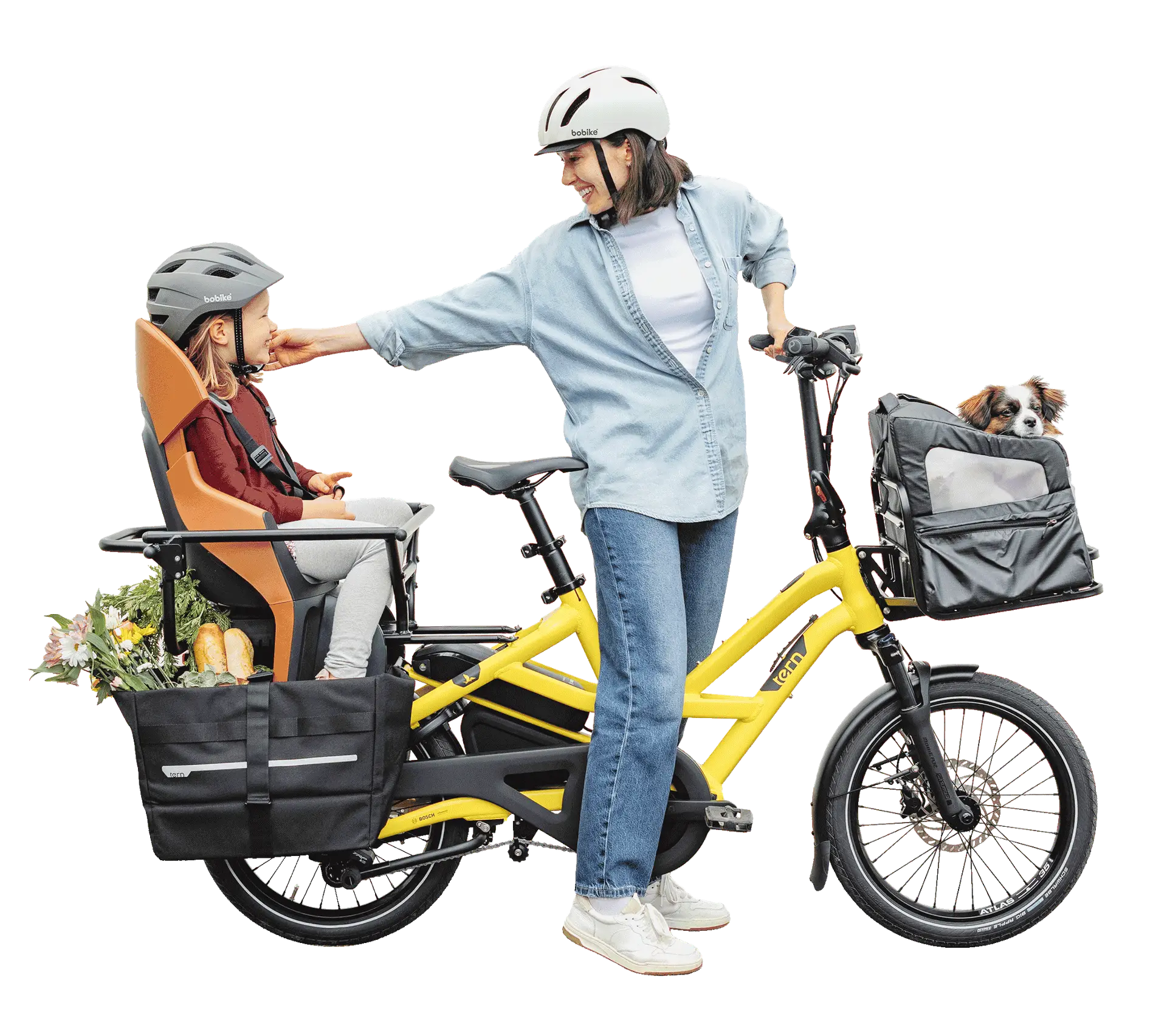
A Yepp seat on the back
Most HSDs leave here with a Thule Yepp 2 Maxi on the rear rack, about $250. It’s a proper child seat with a harness, and it comes off when you want the rack back for groceries.
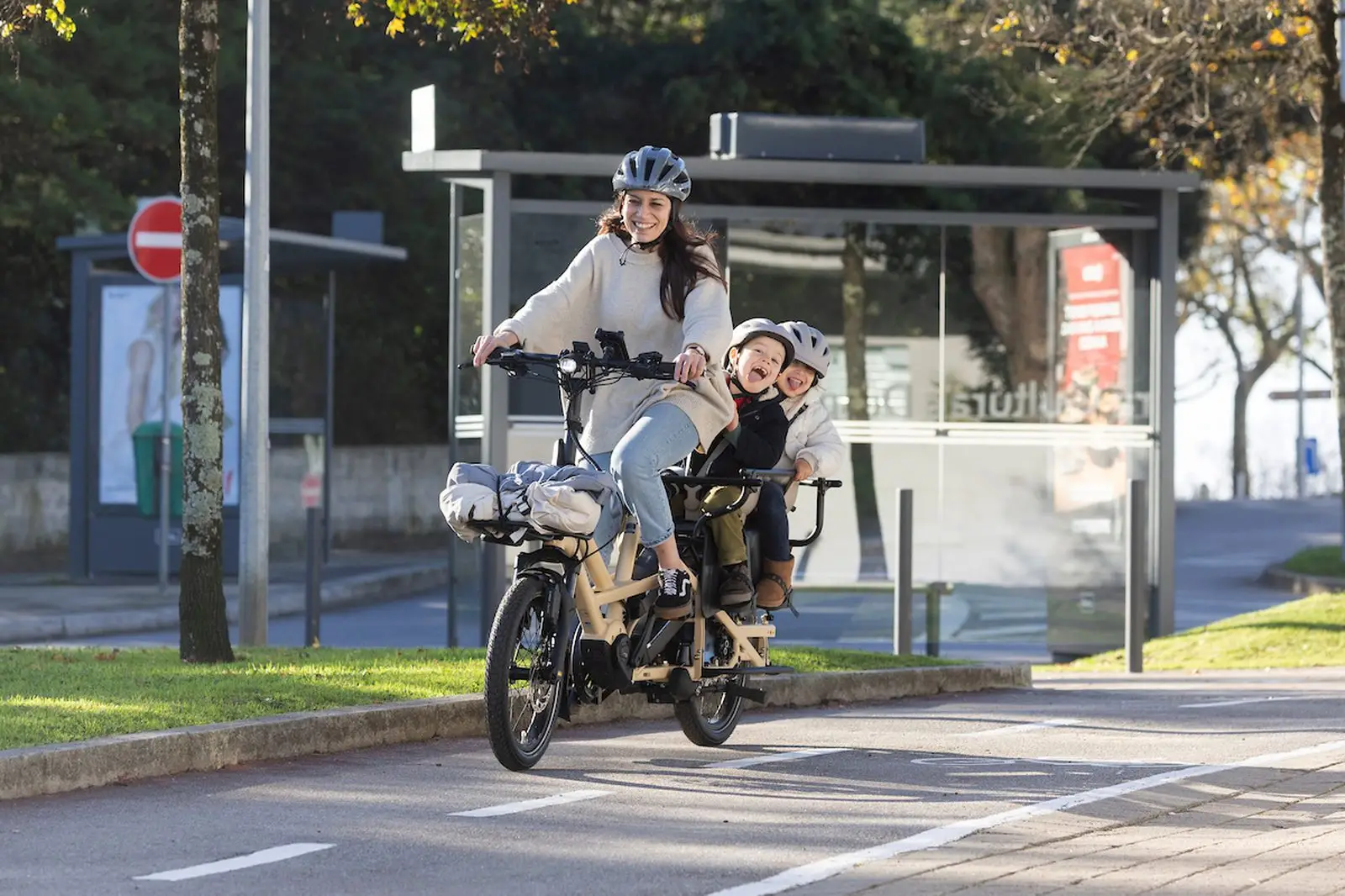
A Clubhouse on the deck
The Clubhouse rails go around the deck, with seat pads, backrests and Stow Decks for their feet. That’s $780 the way I’d set one up, or $345 for the bare minimum to get one kid riding comfortably. A little one who still needs a real seat can ride in a Yepp Maxi instead.
For rain, the Storm Shield ($265) goes up over the Clubhouse.
I’ll set either one up before you ride away, fitted to your kids.
What do they cost?
They start at the same place. The HSD P5i and the GSD P10 are both $4,999. From there the HSD runs through the P10e Sport ($5,499) and P00 ($5,699) to the S9i Sport ($7,499). The GSD goes P00 ($5,999), S10 ($7,999) and R14 ($10,999). We also have a few Gen 2 HSDs from $4,499 while they last.
Both qualify for the Rhode Island e-bike rebate: $350 for most buyers, or up to $750 if you income-qualify. Budget for the kid setup above and a good lock on either one.
So which one should you get?
Get the HSD if most of your riding is just you, and you only carry a passenger on the way home from the train or at school pickup. Get it if it’s one kid, or if the bike has to live inside or go up stairs. It’s the crossover: it does most of what the minivan does, and it’s more fun the rest of the time.
Get the GSD if you’re hauling every day: two kids or one who’s going to get big, heavy loads up hills, or a bike that’s replacing a car rather than adding to one. It’s the minivan, and you won’t outgrow it.
And if you’re still torn, that’s normal. Come ride both back to back with your kids on them. Five minutes on each usually answers it.
Come ride both
We keep GSDs and HSDs on the floor. Bring the kids and ride them loaded, around the block and up the hill. Call ahead and we’ll have both charged and ready.
Book a test ride · (401) 423-4400 · See the HSDs · See the GSDs
Still deciding between a longtail and a front loader? Read Urban Arrow vs Tern GSD.